

The Loudoun Invasive
Removal Alliance
Loudoun County is known for many things—our vineyards, our thriving tech corridor, and now, something entirely homegrown: one of the most extensive community-led invasive-plant efforts in the country. The Loudoun Invasive Removal Alliance (LIRA), founded in 2023, now includes 86 HOAs and communities representing more than 229,000 residents. LIRA was established to work closely with County leadership to confront the accelerating spread of invasive plants and the growing impact on our rural economy, resident health and safety and of course, our environment.
A key part of LIRA’s success has been the remarkable foresight of the Loudoun County Board of Supervisors. Recognizing early that invasive plants pose not only an environmental threat but also a public-awareness challenge, the Board unanimously supported a vision to pair removal work with education. Their leadership resulted in the creation of a $2 million invasive-plant removal grant program—the largest local investment of its kind in the nation—and a model that uses strategic funding to spark widespread public understanding.
LIRA itself began quietly. At first, just a handful of HOA landscaping committee leaders—a mix of current and former Master Gardeners—met informally to share best practices from within their communities. By early 2023, each member realized the same thing: invasive plants were spreading rapidly, and without a coordinated countywide strategy, individual communities could not keep pace. HOA boards across Loudoun soon voted to join a unified effort, and LIRA quickly grew to become one of the largest grassroots initiatives in county history.
The Board of Supervisors heard from LIRA for the first time in October 2023, when residents from across the county—HOA board members, winery owners, farmers, students, and environmental leaders—spoke about the scale of the problem and the need for a community-government partnership. At that time, LIRA represented nearly 200,000 constituents. The Board responded swiftly and thoughtfully: first by allocating $250,000 to develop a grant concept, then by funding a pilot in 2024, and ultimately by unanimously approving a $2 million grant program in January 2025. Their consistent bipartisan support provided the clear direction needed to build a forward-thinking program grounded in community education.
The grant program—administered by the Loudoun Soil and Water Conservation District—awards up to $50,000 per private landowner, including HOAs, farms, wineries, places of worship, and individuals. Funds support the removal of invasive plants identified by the Commonwealth, re-planting with native species where needed, and installation of educational signage. Just as important, every grantee commits to raising awareness among their residents, members, customers, or neighbors through signage, newsletters, field trips, volunteer days, or hands-on demonstrations.
Public awareness is at the heart of the program because Loudoun, like all counties, will never have remotely enough funding to remove every invasive plant on private land. Long-term progress depends on residents recognizing invasive plants, making informed landscaping choices, and taking action on their own properties. By focusing its funding on projects that educate and inspire, the Board created a program with impact far beyond any individual grant site. (continued below)
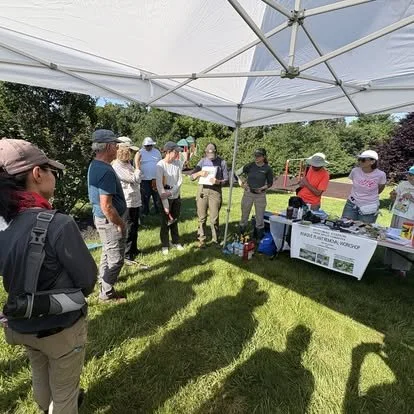
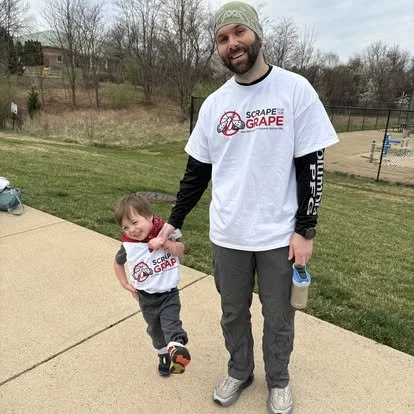
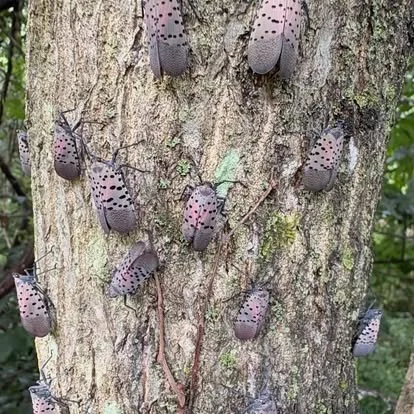
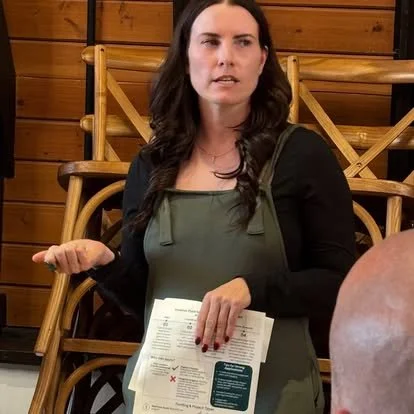
Beyond the grant program, LIRA has supported or led many outreach and community-education initiatives, including the “Scrape for the Grape” Spotted Lanternfly egg-removal campaign, which mobilized more than 800 volunteers in spring 2024. LIRA also brought forward the Bamboo Ordinance that was passed by the Board of Supervisors, supported invasive-plant policy at the state level, and has organized dozens of community trainings and events.
Looking forward, LIRA believes that five years of these targeted, awareness-driven programs could dramatically shift public understanding—from only a small percentage of Loudoun residents recognizing invasive plants today to potentially half the county knowing what to look for. When that level of awareness is reached, the need for the grant program may naturally diminish. The long-term vision: ending the sale of invasive plants in Loudoun, building a sustained volunteer workforce, and establishing a national model for how local government and engaged residents can successfully work together.
Want to join the movement?
See whether your HOA or community is listed here. If it isn’t, LIRA would love to hear from you—please reach out through the contact page on the site.